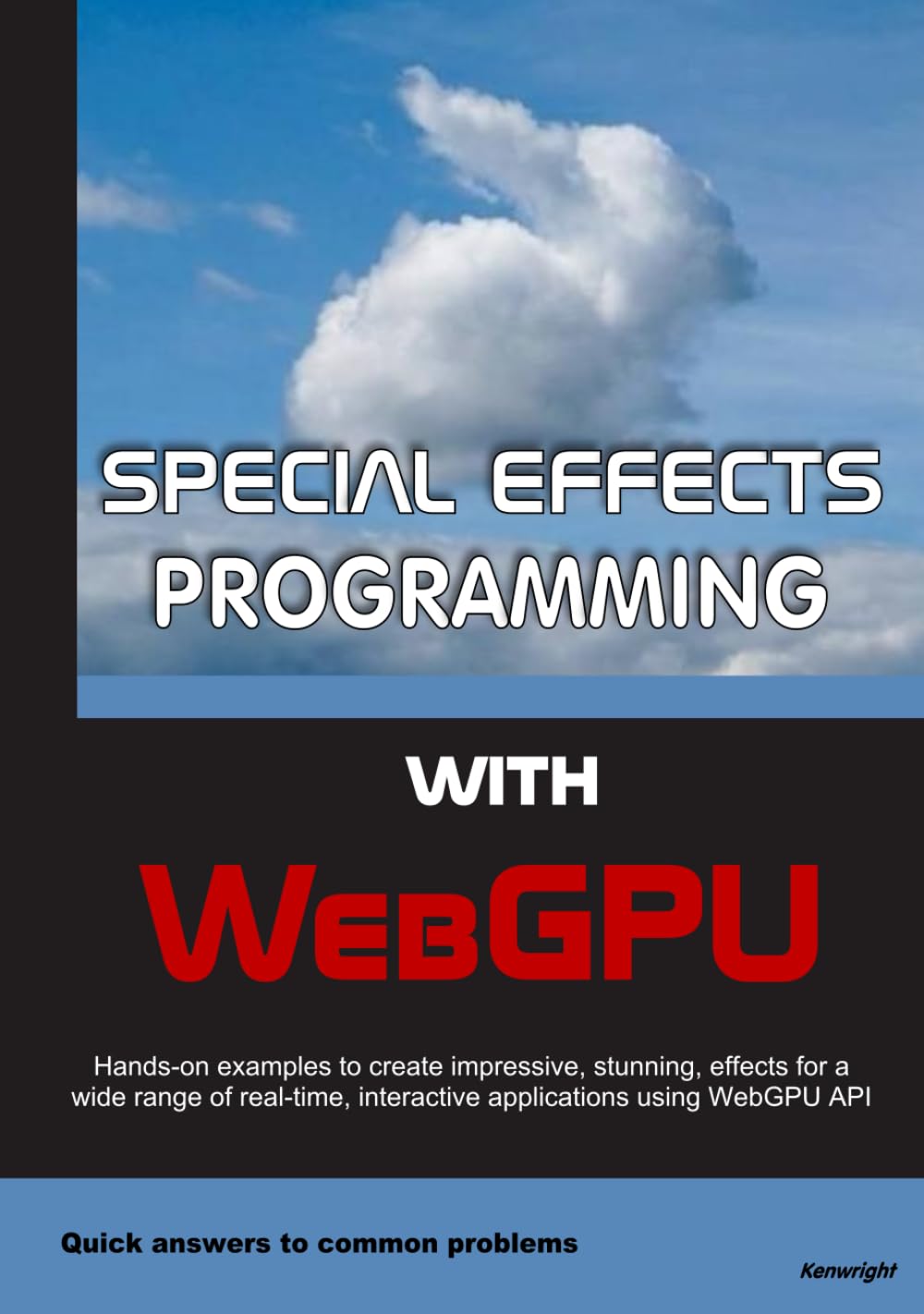
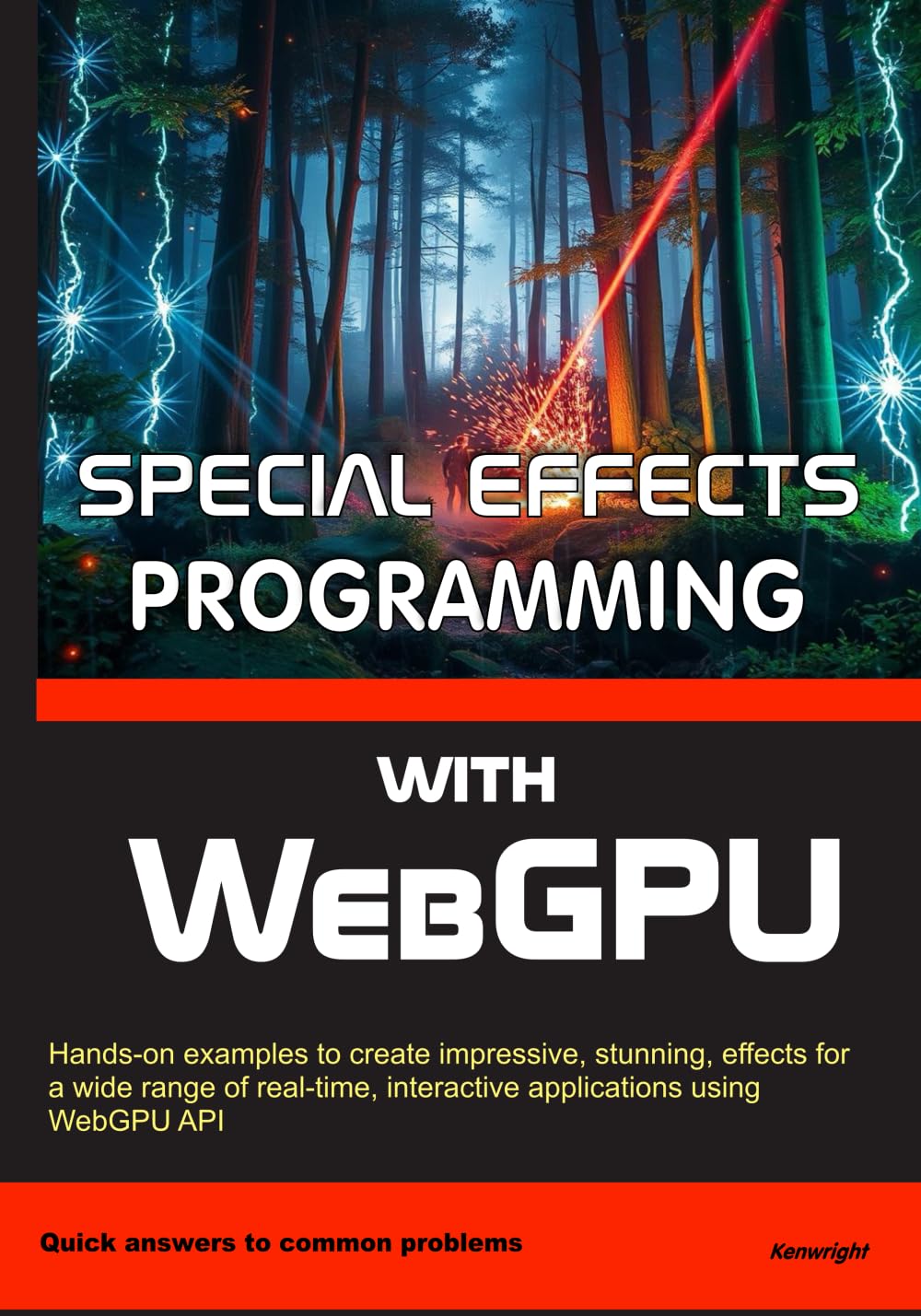
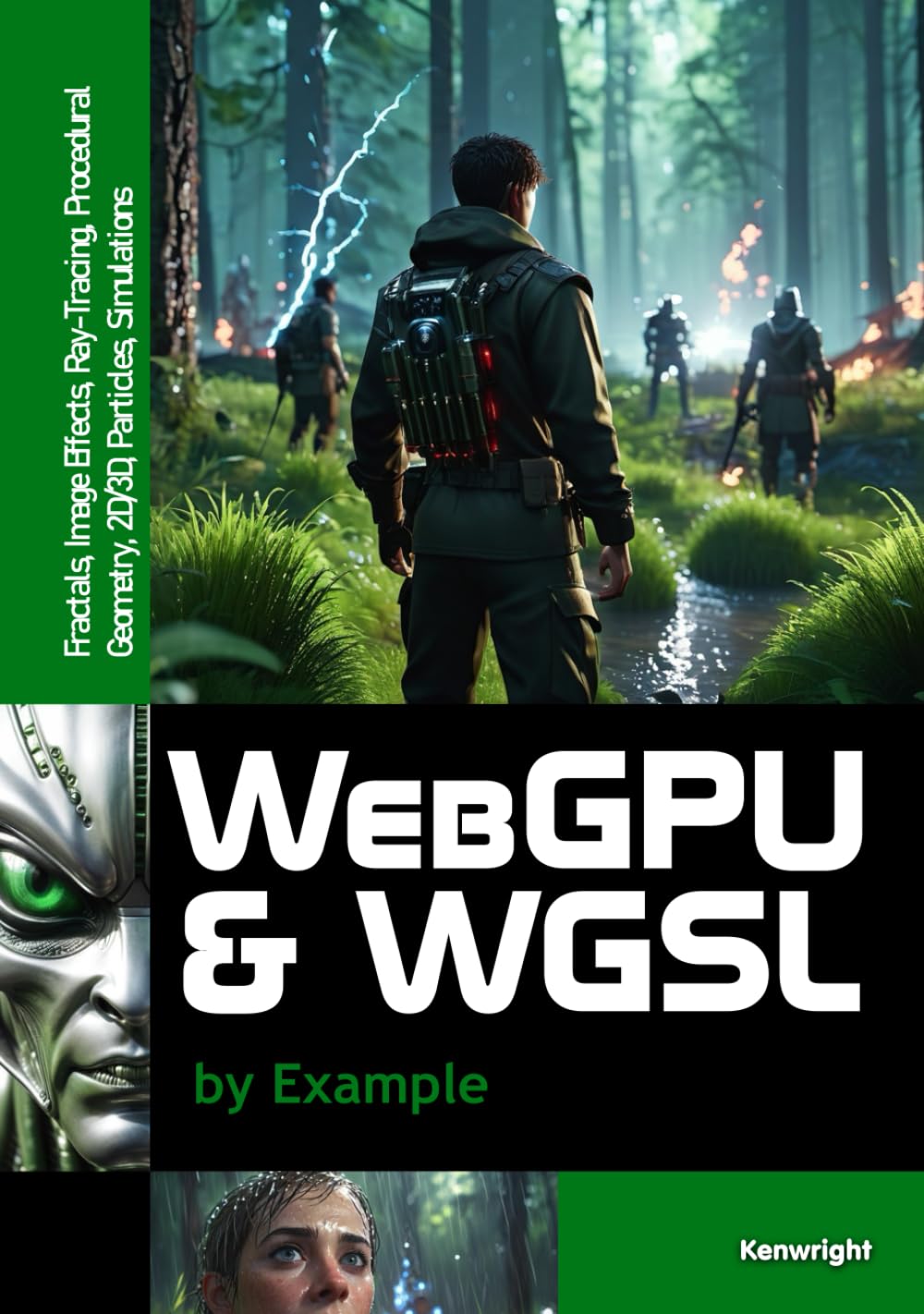
WebGPU Development Pixels: Shader Programming
Quick Facts
- Author: Kenwright
- Publication Date: December 19, 2024
- Pages: 149 pages
- Language: English
- ISBN: 979-8304169462
About This Book
WebGPU Development Pixels: Shader Programming (Paperback) offers a comprehensive and in-depth guide that walks you through the concepts, applications, and best practices. With a strong focus on hands-on examples and real-world relevance, it empowers you to not just learn the theory but to apply it in meaningful ways across graphics, compute, and more.
Our Review
WebGPU Development Pixels: Shader Programming by Kenwright is a unleash your potential with WebGPU Development Pixels: Shader Programming (Paperback)! that delivers on its promise to master practical coding skills. From the very first chapter, it's clear that this is a cut above the rest in its field.
The book excels in its comprehensive and engaging approach to books. The author includes explore real-world projects. and accelerate your learning curve. that make complex topics accessible to readers of all levels. Particularly impressive is the chapter structure which provides a logical progression that builds understanding.
Readers will appreciate the practical applications throughout. WebGPU Development Pixels: Shader Programming (Paperback) - Learn, build, and innovate. that demystify advanced technical topics. that will enhance your understanding and skills. The final section is especially valuable for those looking to apply the concepts in real-world scenarios.
In conclusion, WebGPU Development Pixels: Shader Programming is an outstanding contribution to its field. The combination of the motivation for this book stems from the growing demand for real-time rendering and GPU-accelerated computations in interactive applications. With the advent of WebGPU, a powerful graphics API for the web, WGSL has emerged as a vital tool for developers seeking to harness the full potential of modern GPUs. As the language matures, it promises to bring cutting-edge graphics capabilities directly to the browser, democratizing access to high-performance visuals across platforms. This book focuses on the extraordinary versatility of fragment shaders, exploring their ability to generate intricate visuals and dynamic effects entirely within the GPU pipeline. From simulating physical phenomena to producing stunning visual effects and procedural patterns, fragment shaders excel at operating at the pixel level. We explore how fragment shaders alone can create immersive environments, animations, and simulations - no 3D models, external textures, or traditional rendering pipelines required. makes it one of the most valuable resources we've encountered. We give it our highest recommendation.
Why You'll Love It
- Master practical coding skills.
- Explore real-world projects.
- Accelerate your learning curve.
- Demystify advanced technical topics.
Book Statistics
Reading Level: Advanced
Average Read Time: 3 hours 43 minutes
Reviews: 89%
Recommendation Rate: 92%